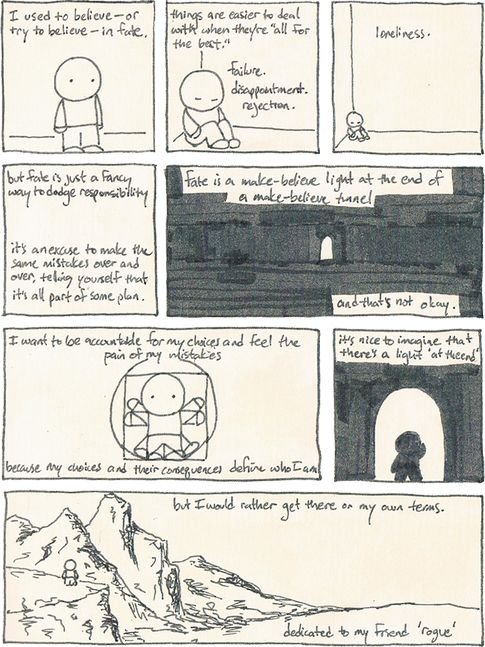
Do you ever feel like certain things in life were just meant to be? Like a chance encounter that changed everything, or a challenge that, despite your best efforts, seemed inescapable? This feeling taps into one of humanity's oldest, most profound debates: Understanding Fate vs. Free Will. It’s a tension as old as philosophy itself, shaping how we view our lives, our choices, and our ultimate purpose.
Is your path already etched in stone, or are you the architect of your own destiny? This isn't just an abstract philosophical question; it profoundly impacts how you navigate challenges, celebrate successes, and take responsibility for your actions. Let's unpack it.
At a Glance: Fate vs. Free Will
- Fate: Suggests events are predetermined, unchangeable, and beyond human control. Your life is mapped out, a script you follow.
- Free Will: Argues you have the power to make choices, shape your destiny through decisions and actions. You write your own script.
- The Interplay: While often seen as opposing, many perspectives suggest a complex relationship where external circumstances meet personal agency.
- Impact on Responsibility: Fate can lead to fatalism; free will emphasizes accountability.
- Shaping Your View: Your stance on this debate influences your outlook on life, ambition, and moral choices.
The Ancient Dance: Tracing the Roots of a Timeless Debate
For millennia, thinkers, poets, and spiritual leaders have grappled with the question of how much control we truly have. Is life a river, carrying us inevitably downstream, or a vast ocean where we chart our own course?
The concept of Fate posits that certain events—perhaps even your entire life—are predetermined, set in motion by forces beyond your control. Think of it as a cosmic blueprint, a script written before you even arrive. If fate rules, then your choices, while feeling real, are ultimately just stepping stones on a pre-ordained path. This idea often ties into a belief in an overarching divine plan or an inexorable chain of cause and effect.
Conversely, Free Will champions the radical notion that you are the primary agent in your life. Every decision, every action, every response to circumstance is a product of your individual volition. You possess the power to choose, to deviate, to innovate, and to shape your future, unfettered by predetermined outcomes. Your destiny isn't a fixed destination, but rather a landscape you traverse and transform with each step.
These two concepts, though seemingly polar opposites, often find themselves intertwined in surprising ways. It's in this complex relationship that much of life's mystery and meaning reside.
Fate's Firm Grip: When Destiny Feels Inevitable
The idea of fate can be both comforting and terrifying. On one hand, it can offer solace, suggesting that certain hardships or setbacks are simply "meant to be" and thus, perhaps, easier to accept. On the other, it can strip away the sense of personal agency, leading to questions about the point of effort if the outcome is already decided.
Historically, fate has been deeply embedded in many belief systems and narratives.
Divine Decrees and Prophetic Paths
In many religious and spiritual traditions, the concept of fate manifests as divine predestination. For instance, some interpretations of Christianity incorporate the idea that God has foreordained certain events or even the salvation of individuals. This often implies that while humans make choices, a higher power ultimately orchestrates outcomes.
Ancient Greek epics like Homer's The Iliad and The Odyssey vividly illustrate characters grappling with prophecies and divine interventions. Heroes like Achilles wrestle with dilemmas, knowing their future is influenced by the gods, yet still striving to make choices that align with their honor or desires. Here, fate isn't an excuse for inaction but a dramatic backdrop against which human courage and folly play out. Similarly, in Roman epics like Virgil's The Aeneid, heroes like Aeneas navigate a path clearly laid out by destiny, yet their individual actions and moral choices are crucial in fulfilling that predetermined outcome. It’s a fascinating blend where individual action coexists, often dramatically, with predetermined outcomes.
The Sense of Resignation
When people strongly believe in fate, it can sometimes lead to a sense of fatalism. This is the idea that because events are predetermined, there's little point in striving or taking responsibility. If your life is already mapped out, why exert yourself? This perspective can be disempowering, leading to resignation rather than proactive engagement with life's challenges. If we fully embraced this idea, our societies might look very different; the very notion of justice and personal improvement would be challenged.
Free Will's Empowering Embrace: The Power of Choice
In direct contrast stands free will, a concept that places the power squarely in your hands. It asserts that you are not merely a passenger on a predetermined journey but the driver, navigator, and even the road builder.
Shaping Your Own Destiny
The core tenet of free will is that your choices, decisions, and actions are the primary shapers of your future. Your destiny isn't a fixed point but an evolving landscape, sculpted by every intentional step you take. This perspective offers immense empowerment, suggesting that you have the capacity to overcome obstacles, achieve goals, and redefine your path, regardless of past circumstances. It encourages you to consider strategies for navigating life's major crossroads and to understand that your agency plays a critical role.
Many spiritual traditions, such as Buddhism and Taoism, heavily emphasize free will and personal responsibility. In these frameworks, individuals create their own "karma" through their actions and intentions. The path to enlightenment or a balanced life is a direct result of conscious choices and the cultivation of virtues. There's no escaping the consequences of your actions, good or bad, because they directly influence your future experiences. This concept is closely tied to the profound consequences of our decisions.
Taking Ownership and Responsibility
A strong belief in free will fosters a deep sense of personal responsibility. When you believe your choices matter, you are more likely to own your actions, learn from mistakes, and proactively work towards desired outcomes. This isn't just about accountability for negative actions; it's also about recognizing your capacity for positive change and growth. You are morally responsible for your choices because you possess the freedom to make them. This is a fundamental aspect of how we construct our legal and ethical systems. Without free will, the very idea of praise or blame would crumble.
The Intertwined Path: Navigating the Complex Relationship
So, are we puppets of fate or masters of our own destiny? For many, the answer isn't an either/or proposition but a nuanced understanding of their complex interplay. The most compelling perspectives often suggest that while certain circumstances or predispositions might be "given," how we respond to them is where our free will truly shines.
Imagine a game of cards. You're dealt a hand – that's a bit like fate, the circumstances you're born into or encounter. You don't choose the cards. But how you play that hand – the strategies you employ, the risks you take, the decisions you make – that's your free will in action. The outcome isn't solely determined by the cards you receive but by how skillfully you play them.
Circumstance Meets Choice
Our lives are a constant dialogue between external forces and internal agency. We didn't choose our parents, our birthplace, or many initial life circumstances. These are elements that feel very much like fate. However, within these given parameters, we continually make choices: how to react, what to learn, where to focus our energy. Even seemingly small decisions can ripple outwards, altering our trajectory in significant ways.
Modern literature continues to explore this dynamic, often focusing on personal autonomy versus societal expectations. Characters in contemporary novels frequently grapple with how much of their identity and purpose is shaped by external pressures (like family expectations, economic conditions, or cultural norms) versus their own desires and moral choices. This ongoing exploration helps us understand the impact of societal expectations on individual lives.
The Power of Perspective
One powerful way to reconcile fate and free will is through perspective. You might not control every event that happens to you, but you almost always have control over your reaction to those events. This isn't just philosophical fluff; it's a cornerstone of many therapeutic approaches. Viktor Frankl, a Holocaust survivor and psychiatrist, famously wrote, "Everything can be taken from a man but one thing: the last of the human freedoms—to choose one's attitude in any given set of circumstances, to choose one's own way." This embodies a profound assertion of free will even in the most fated and terrible circumstances.
This isn't to say that all challenges are simply a matter of attitude; severe external limitations are real. But recognizing the sphere of your influence, however small it may sometimes seem, is a powerful act of embracing free will.
Practical Frameworks: How to Live with the Tension
Living with the concepts of fate and free will doesn't require you to pick one definitively. Instead, it invites a mindful approach to life that leverages the best of both perspectives.
1. Embrace What You Can't Control (Fate's Wisdom)
There are undeniably forces at play beyond our individual control – global events, natural disasters, other people's choices, even some aspects of our biology. Attempting to control these is a recipe for frustration and suffering.
- Practice Acceptance: Acknowledge when a situation is truly beyond your direct influence. This isn't resignation, but a wise allocation of your energy.
- Find Meaning in the Unforeseen: Sometimes, unexpected "fated" events can be catalysts for growth or redirection. Look for the lessons or new opportunities even in challenging circumstances.
- Let Go of Blame (Sometimes): While personal responsibility is crucial, recognizing that some outcomes are a confluence of factors (some beyond your control) can temper harsh self-judgment or blame towards others.
2. Own What You Can Influence (Free Will's Power)
Within the broader currents of life, there is an immense space for your agency. This is where your true power lies.
- Conscious Decision-Making: Make choices intentionally. Understand the potential repercussions and align your actions with your values. This is your personal sphere of influence.
- Cultivate Resilience: When "fated" setbacks occur, your free will empowers you to choose your response. Do you give up, or do you adapt, learn, and persevere?
- Set Goals and Act: Don't wait for destiny to deliver. Actively pursue your aspirations. Your effort, planning, and consistent action are direct expressions of your free will.
- Take Responsibility: For your actions, your reactions, and your effort (or lack thereof). This builds integrity and empowers growth.
3. The Creative Edge: A Synthesis
Perhaps the most potent way to engage with this debate is to see yourself as a co-creator of your reality. You don't control every ingredient, but you do control the recipe and how you mix them.
Consider the notion of 'soft fate' or 'flexible destiny.' This idea suggests there might be certain general markers or major life events that are somewhat predetermined, but the exact timing, the people involved, and how you navigate these points are left to your free will. For example, it might be 'fated' that you will experience a significant career change, but your choices determine whether that change is a positive leap or a difficult struggle.
This perspective invites us to delve deeper into the philosophy of choice and understand that agency isn't about absolute control, but about meaningful influence within a larger framework.
Addressing Common Questions and Misconceptions
This age-old debate naturally brings up a lot of "what ifs" and "buts." Let's tackle a few common ones.
"If fate exists, why bother trying?"
This is a classic fatalistic trap. Even if fate exists, the experience of life, the journey itself, and the growth you undergo are real. Moreover, if your actions are part of the fated plan, then trying is simply part of that plan! From a free-will perspective, not trying guarantees you won't achieve your goals. So, regardless of your philosophical stance, action remains the most rational path.
"Can you have both fate and free will?"
Absolutely. Many spiritual and philosophical traditions embrace this paradox. Think of it like this: You are born with certain genetic predispositions (fate), but your lifestyle choices (free will) heavily influence how those genes express themselves. Or, you encounter a particular person (fate), but your choices dictate whether you develop a deep relationship or merely pass them by (free will). The ground truth of our experience suggests a constant interplay between external forces and internal decisions. This interaction is key to your comprehensive guide to 페이트택시 and similar topics exploring complex life intersections.
"Does believing in one over the other make a difference?"
Yes, a significant one. Believing primarily in fate can lead to passive acceptance, decreased motivation, and a diminished sense of personal responsibility. Believing primarily in free will, while empowering, can sometimes lead to excessive self-blame for things truly outside one's control or an unrealistic expectation of absolute power. A balanced perspective, acknowledging both, fosters resilience, acceptance, and proactive engagement. It helps in exploring how we find purpose and meaning within a complex world.
The Bottom Line: Your Empowered Approach to Life
The debate around fate and free will isn't about finding a definitive, universally agreed-upon answer. It's about finding a perspective that empowers you to live a more meaningful, responsible, and engaged life.
Ultimately, your journey is your own. Whether you believe your path is pre-ordained or self-created, the act of making choices, taking responsibility, and striving for growth is fundamentally human. Embrace the mystery, but never underestimate the profound power of your own will.
Instead of getting lost in the "either/or," consider the "and." Acknowledge the tides of circumstance, but always grab the rudder. Your capacity for choice, for growth, and for shaping your reactions is your ultimate freedom. Use it wisely.
Untuk pemahaman lebih lengkap, baca panduan utama kami: Your comprehensive guide to 페이트택시